
“The best way to predict the future is to create it,” said Peter Drucker. As we look toward 2026, the retail and hospitality sectors are changing a lot.
To enter this space, you need more than just tech skills. You need a strategic roadmap to build a lasting business that meets client needs.
Our guide shows how to start a profitable POS service that shines in a busy market. By using top-notch equipment and reliable support, you can grow a successful POS hardware business.
This is a special pos agent business opportunity for those who want to be innovative. Let’s go over the key steps to make your dream come true.
Key Takeaways of POS Hardware Business
- Identify the specific needs of modern retail and hospitality clients.
- Prioritize long-term reliability to ensure recurring revenue streams.
- Build strong partnerships with hardware manufacturers for better margins.
- Focus on exceptional customer support to differentiate your brand.
- Scale your operations by leveraging emerging payment technologies.
Understanding the Modern POS Agent Business Opportunity
Today, entering the point of sale industry is exciting. It’s not just about selling hardware. You’re giving businesses the essential infrastructure they need to thrive. Every store, online or offline, needs a way to accept payments.
The heart of this industry is payment processing. Businesses need a smooth link between their physical and digital systems. This ensures money moves safely. By providing these solutions, you become a key player in your clients’ success.
“Digital transformation is no longer a luxury for small businesses; it is the fundamental requirement for survival in a competitive global market.”
The POS market growth is huge, thanks to mobile and cloud-based solutions. The Mobile POS Payments market is expected to grow by 12.77% from 2024 to 2028. It will reach a total of US$6.08 trillion. This growth opens doors for agents who can offer modern tech to local businesses.
To do well, you need to know how hardware, software, and payment processing work together. The table below shows the differences between old systems and the new ones you’ll offer.
| Feature | Legacy POS Systems | Modern POS Solutions |
|---|---|---|
| Connectivity | Hardwired/Local Server | Cloud-Based/Mobile |
| Data Access | Limited/On-site only | Real-time/Remote access |
| Integration | Difficult/Manual | API-driven/Automated |
| Scalability | Low/Expensive | High/Flexible |
By focusing on these modern systems, you can grab a big part of the market. Your job is to connect complex financial tech with what businesses need every day. This strategic approach keeps your business relevant as tech keeps changing.
Market Research and Identifying Your Target Niche
Every successful POS business starts with good market research. It’s key to focus on solving specific problems, not just selling hardware. By targeting special needs, you offer real value to local owners.

Analyzing Local Retail and Hospitality Demands
Success comes from understanding local businesses. Cafes, boutiques, and restaurants face issues with old systems. They need better inventory tracking and loyalty programs.
By mapping your area, you find businesses with similar needs. For example, coffee shops need different setups than clothing stores. Knowing these needs helps you grow in your area.
Evaluating Competitor Service Offerings
After finding your niche, check what others offer. Many are stuck in bad contracts with poor support. You can offer better, more flexible options.
Make a comparison chart to see what your competitors lack. Look for slow service or no tech support. By fixing these issues, you grow your business and keep customers loyal.
Legal Requirements and Business Registration
Starting a POS service means knowing the law about money. We must follow POS compliance rules to keep our money safe. Having a business name helps manage risks and keeps things stable.

Structuring Your Business Entity
Picking the right business type is key. It affects your taxes and how safe your money is. Many choose an LLC for its flexible setup and simple taxes. This keeps your personal money separate from your business.
You must register your business with your state. This means filing papers and getting an EIN from the IRS. Keeping up with POS compliance helps your business grow without trouble.
| Entity Type | Liability Protection | Tax Treatment | Complexity |
|---|---|---|---|
| Sole Proprietorship | None | Personal Income | Low |
| LLC | High | Pass-through | Moderate |
| Corporation (C-Corp) | High | Double Taxation | High |
Obtaining Necessary Licenses and Permits
You also need special licenses to work in payments. Most states need a general business license. You might also need a sales tax permit for hardware sales. Not getting these can cause big fines or losing your merchant services.
Depending on your business, you might need to register as a payment facilitator or ISO. Always check with a lawyer to see if you need more state permits. Staying on top of POS compliance helps your business stay strong in the US market.
Selecting Reliable POS Hardware Partners
Finding the right equipment is key for a business to thrive. When starting a POS hardware business, your success depends on the terminals you use. We look for partners with durable, easy-to-use tech to keep your merchants running smoothly.
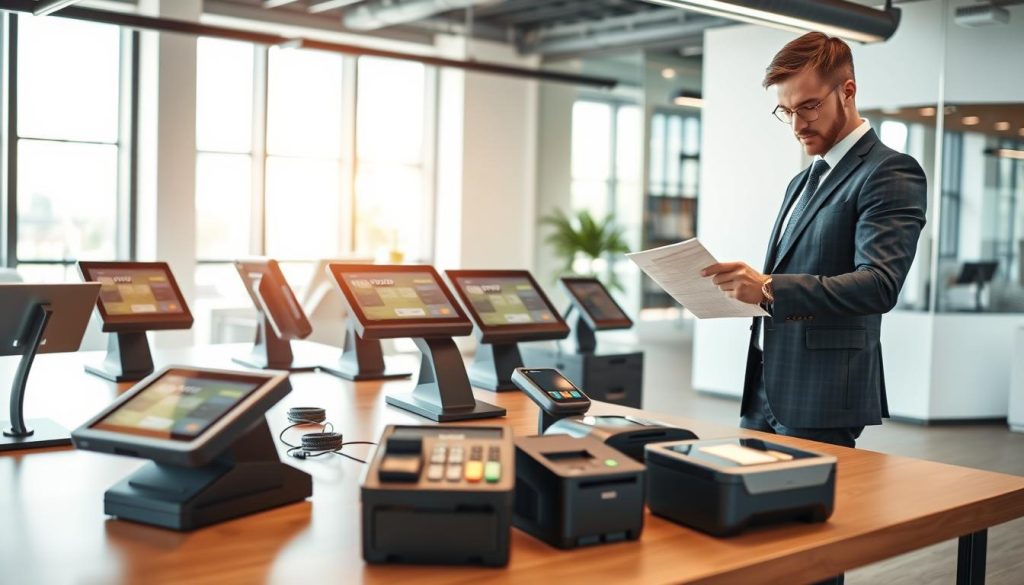
Evaluating Top Hardware Providers like Clover and Toast
Big names like Clover and Toast are leaders for a reason. Clover is known for being easy to use with many payment options. It works well with AGMS processing, giving you better rates than flat fees.
We prefer non-proprietary systems for more freedom. They let you change payment gateways without updating all your terminals. This strategic flexibility helps your clients and keeps you valuable as a trusted advisor.
Establishing Wholesale Supply Chains
Having a steady supply of quality terminals is vital for growth. You need to work directly with authorized distributors for real hardware at good prices. Using secondary markets can lead to warranty problems and fake products that harm your brand.
Keep a small stock of essentials like receipt printers and scanners. This way, you manage your money well and can quickly meet client needs. Here’s a table to help you choose how to stock your inventory:
| Sourcing Method | Cost Efficiency | Lead Time | Reliability |
|---|---|---|---|
| Direct Manufacturer | High | Long | Excellent |
| Authorized Distributor | Medium | Short | High |
| Secondary Market | Low | Immediate | Variable |
Developing Your Software and Payment Processing Stack
A good POS software stack is key for today’s shops and hotels. It makes sure everything works together smoothly. This helps your clients work better.
Integrating Merchant Services and Gateway Providers
We need to work with merchant services that are reliable and offer good rates. They help money move from customers to business owners. Choosing a gateway provider that’s always up is very important.
Look for providers that are easy to work with and support many payment types. A strong payment processing system should handle many ways to pay. This makes checking out easy for customers.
Ensuring PCI Compliance and Data Security
Following POS compliance rules is a must to keep card data safe. We follow PCI DSS to avoid security problems. This shows you care about keeping data safe.
We use strong encryption and tokenization to keep data safe. Teaching your clients about POS compliance shows you’re more than just a vendor. Keeping customer info safe is key to a good service.
| Feature | Standard Gateway | Premium Processor | Integrated POS |
|---|---|---|---|
| Transaction Speed | Moderate | Fast | Instant |
| Security Level | Basic | Advanced | PCI Compliant |
| Support Access | Email Only | Phone/Chat | 24/7 Dedicated |
| Integration Ease | Manual | API Required | Plug-and-Play |
Building Your Service and Maintenance Model
Offering exceptional customer service sets your business apart. A strong service model is key to success. High-quality POS maintenance keeps customers coming back and builds trust.
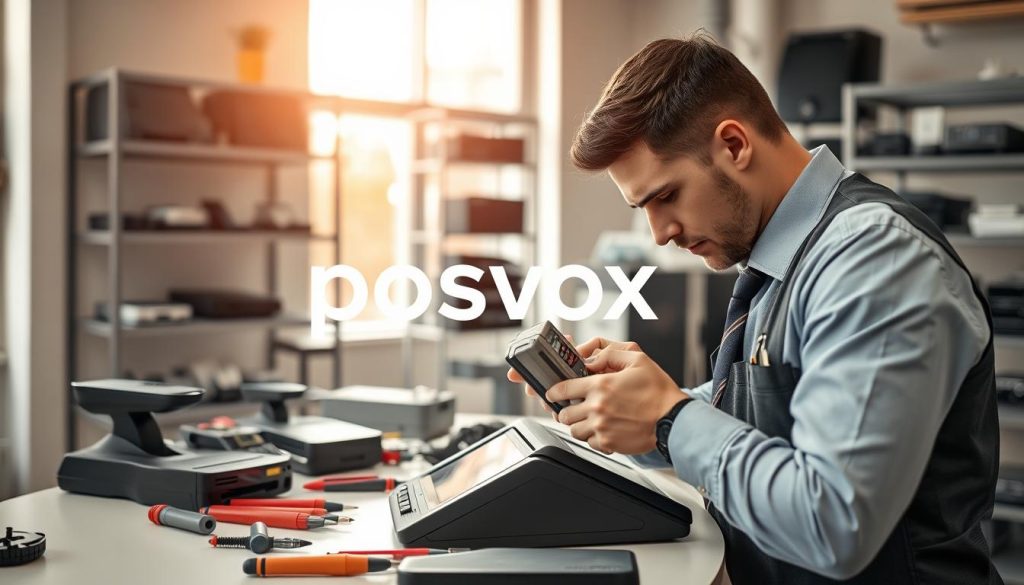
Defining Your Technical Support Tiers
It’s smart to have different levels of support. Tier one is for quick fixes over the phone. This saves time and money.
Tier two is for harder problems that need someone to come to your place. This way, you help your clients and keep costs down. It makes sure the right person fixes the problem.
Creating Preventative Maintenance Packages
Offering care plans keeps systems running smoothly and brings in steady money. It’s a step towards a proactive partnership. Regular checks stop problems before they start.
Your plans should include updates, cleaning, and security checks. This gives business owners peace of mind. It’s a key part of making your business grow.
Pricing Strategies for Hardware and Recurring Revenue
Learning how to price right is key for a profitable POS service business. The best agents mix selling hardware now with making money later. This way, they help small businesses start easily and stay competitive.
Structuring Upfront Hardware Costs
When you meet new clients, the cost of hardware is often a big problem. We suggest flexible options to help merchants start without a huge upfront cost. Think about leasing programs or packages that spread the cost over time.
This makes it easier to get deals done fast. Strategic pricing makes you a partner, not just a seller. This builds trust and opens the door for a long-term relationship.
Maximizing Monthly Residual Income
The real strength of this model is in recurring revenue. Hardware sales give you quick money, but ongoing fees from merchant services give you steady income. Look for low-cost, high-value services to keep clients for years.
“The shift from one-time hardware sales to a subscription-based model is the single most important factor in scaling a modern payment business.”
For example, SwipeSimple is a cheap mobile solution starting at $10 a month. It’s much cheaper than usual fees, making it great for small businesses. By focusing on these affordable, scalable options, your recurring revenue will grow with your clients.
| Pricing Model | Upfront Cost | Monthly Fee | Profit Margin |
|---|---|---|---|
| Direct Purchase | High | Low | Immediate |
| Leasing Plan | Low | Moderate | Steady |
| Subscription POS | Minimal | Fixed | High Long-term |
Your goal is to build a profitable POS service that works for you and your merchants. Diversify your income with smart merchant services management. This two-way approach is key to a growing, stable business.
Sales and Marketing Tactics for POS Agents
The best agents keep reaching out to grow their client base. Good sales and marketing are key for any new payment service business. By doing important work, you can get recurring revenue and become a big name in your area.

Developing a Direct Sales Outreach Strategy
A great POS sales strategy finds local business owners stuck in bad deals. They’re tired of hidden fees and old tech. You can offer them better deals and new tech.
Plan your visits carefully. Know your area well and talk to business owners face-to-face. Building real connections works better than just calling. Show them how your service helps them long-term, not just for a quick sale.
Leveraging Digital Presence for Lead Generation
Today, you need both local connections and a strong online presence. Your website should tell people about your services and tech. Make sure it shows up when local businesses search for upgrades.
Use content marketing to show you know a lot about payment tech. Write about making checkout faster or managing stock better. This builds trust and helps you get more clients. A solid POS sales strategy turns your online presence into a steady stream of leads.
Installation and Onboarding Best Practices
A smooth onboarding is key to a good merchant relationship. When you offer top-notch merchant services, the start is your chance to show your worth. A smooth start lets your clients start taking payments right away.
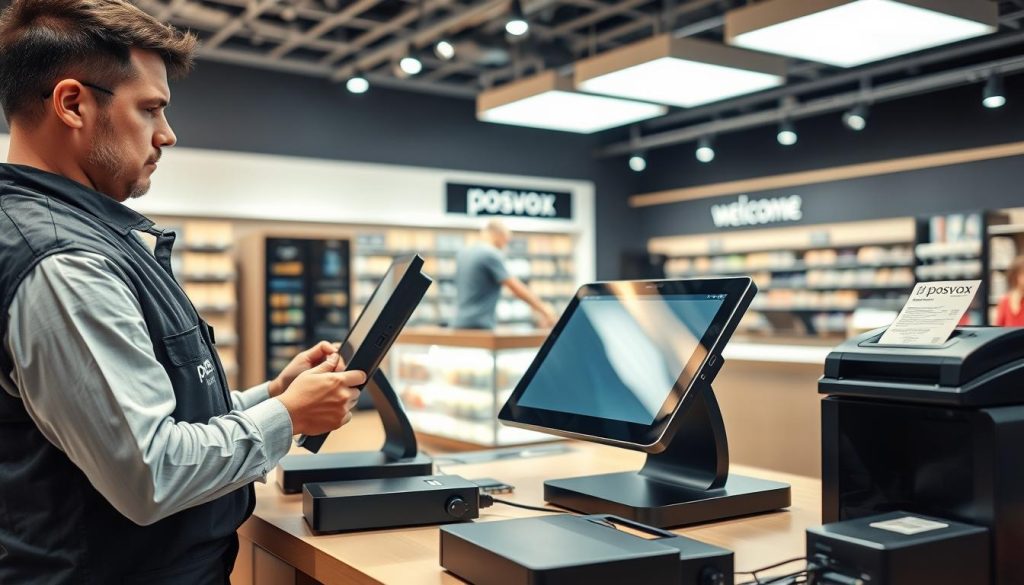
Standardizing the Setup Process
Being consistent helps your business grow. A standard process means every client gets the same great service. Use partners like AGMS for free setup and help.
Standardizing helps spot problems early. Documenting each step of POS installation cuts down on mistakes. This saves time and makes you look professional.
Training Staff on POS Functionality
Good training cuts down on support needs and boosts customer happiness. Give clear guides and hands-on training. This makes your team confident and helps clients solve simple problems.
Trained staff can also help your business grow. Happy clients are more likely to recommend you. This helps get more POS lead generation and turns happy clients into your best marketers.
Scaling Your Operations and Managing Growth
Going from solo to business owner changes your daily tasks. As more clients come, you can’t do everything yourself. This is key for POS scaling.
You’ll focus more on big plans and less on daily tech problems. This helps your business grow.
Hiring and Training Field Technicians
Your team’s quality is vital for good service. Start by hiring skilled field techs for POS installation and upkeep. Consistency is key when you’re not doing the work.
Make a training plan for your techs. Teach them about your specific systems. This way, every client gets the same service. It lets you work on growing your business.
Automating Customer Relationship Management
Keeping track of clients gets harder as you grow. You need a good CRM in your POS software stack. It helps you see everything and find new sales chances.
Managing your recurring revenue is also key. Automate your POS sales strategy for reminders on upgrades or renewals. This keeps your business growing without missing chances.
Navigating Challenges in the 2026 POS Landscape
Staying ahead in the POS hardware business means knowing what’s coming. The industry is changing fast, with big companies controlling how things work. For example, Square can stop your account anytime, leaving you without help.
Being personal and human is your best trick. Local support is key when big companies can’t help. This keeps your clients running, even when big systems fail.
Adapting to Emerging Payment Technologies
Today’s payment processing is more than just swiping cards. You need to offer contactless and mobile payments. Clients want fast, secure, and easy transactions.
Keeping up with POS compliance is also vital. Check your software every few months to stay safe. Proactive updates keep your clients’ data safe and build trust in your brand.
Managing Hardware Supply Chain Disruptions
Global issues can make finding equipment hard. To keep things running, use many suppliers. Having extra parts in stock helps when things run out.
The table below shows how to deal with common problems:
| Risk Factor | Mitigation Strategy | Impact on POS Scaling |
|---|---|---|
| Account Termination | Provide dedicated account management | High retention |
| Hardware Shortages | Maintain multi-vendor inventory | Service continuity |
| Tech Obsolescence | Regular software updates | Competitive edge |
How you handle these challenges will shape your future. Focus on being reliable and quick to adapt. This way, you’ll thrive as the POS market grows in the years to come.
Conclusion
Success in today’s retail world needs a clear plan and steady action. You now know how to make the most of the growing pos agent business chance in the U.S.
A good POS service depends on meeting merchant needs. Working with top POS hardware providers like Clover or Toast is key. This ensures your clients get the best tools.
Your growth depends on a smart POS sales plan. Build trust with local business owners by being open and helpful. Quick and professional POS setup adds value and boosts your reputation.
Don’t forget to grow your POS business as it gets bigger. Use automation to handle more accounts better. Begin your journey now to be a big part of this fast-changing digital world.