Sarah, a local boutique owner, worked hard to build a loyal customer base. When she wanted to change her digital setup, she found out her old provider had all her sales data. She learned that just getting insights doesn’t mean you own the data.
Many business owners think they own their data because they made it. But, third-party vendors often hide rules in contracts that limit access to this data. This lack of pos system data ownership can really hurt a business, whether it’s during a change or a security check.
Keeping your data safe is key for your business’s future. By taking back control, you make sure your valuable insights stay with your company. This guide will help you keep your records safe and free from strict service providers.
Key Takeaways of pos system data ownership
- Understand the difference between collecting information and actual legal control.
- Review vendor contracts to identify hidden clauses regarding information access.
- Prioritize platforms that allow for easy export and migration of your records.
- Recognize that your transaction history is a critical business asset for growth.
- Take proactive steps to secure your digital footprint against vendor lock-in.
Understanding the Fundamentals of POS System Data Ownership
True POS system independence starts with knowing who owns your business data. Many think their software subscription gives them full control. But, service agreements today are more complicated.
Defining Data Sovereignty in Retail and Hospitality
In retail data sovereignty, it means a business controls its data. This lets a company handle its data freely, without software provider limits. For shops and hotels, this freedom is key for growth.
Without data control, a business can get stuck with one vendor. Keeping data control means your records stay yours, no matter the platform. This is key for keeping customer info safe and sales trends private.
The Difference Between Data Access and Data Ownership
It’s important to know the difference between data access and ownership. Access lets you see or download reports through a vendor’s tool. Ownership means you have the legal right to manage your data.
| Feature | Data Access | Data Ownership |
|---|---|---|
| Control | Limited to vendor tools | Full authority over assets |
| Portability | Restricted by vendor formats | Complete freedom to migrate |
| Legal Rights | Subject to service terms | Proprietary rights held by you |
Why Vendors Often Seek Control Over Your Transactional Records
Vendors want to control your data for their own gain. They use it to improve their services or sell it to others. This can help them but might hurt your privacy.
Some say they need your data for system upkeep. But, smart business owners know keeping data control is key. This way, your most valuable asset stays with you.
The Risks of Relinquishing Control to Third-Party Providers
Handing over your transaction records to outside vendors is risky. They promise easy integration but ask you to give up your digital stuff. This makes you dependent on them, which is hard to change as your business grows.
Vendor Lock-in and the Cost of Switching Systems
Vendor lock-in risks are a big problem. If your data is in a special format, switching systems is hard and expensive. You might have to pay a lot just to get your own data back.
- High migration costs for proprietary databases.
- Loss of historical records during system transitions.
- Extended downtime while waiting for data exports.
Security Vulnerabilities and Data Breach Liability
Using outside partners can make your business more vulnerable. The 2013 Target breach shows this. It was caused by a weak security at a third-party HVAC vendor. Even if your systems are secure, a breach at a partner can hurt your business a lot.
The security of your business is only as strong as the weakest link in your supply chain.
Limited Access to Historical Sales Analytics
Good management needs deep insights. But many vendors limit your POS data analytics. Without your transaction history, you can’t spot trends or improve your stock. True business intelligence means you should own your data, not just see it through a vendor’s lens.
Evaluating Your Current POS Service Agreement
Looking closely at your service agreement is key. It shows if you really own your data. Many business owners don’t check their POS contracts until a problem happens. It’s better to review them now to avoid big troubles later.
Identifying Ownership Clauses in Standard Contracts
Most service agreements have special language about data rights. Look for parts that say exclusive ownership of your data. If the contract says the vendor owns all your data, you’re in trouble.
Being clear is important when you read these legal papers. If the language is unclear or too wide, it usually helps the vendor more than you. Make sure to ask if you keep your sales records after the contract ends.

Recognizing Hidden Fees for Data Extraction
Some providers ask for a lot of money to get your data when you want to switch. These extra costs are often hidden in the contract. Knowing about these fees early helps you avoid being stuck with a vendor that won’t let you go.
Vendors might say getting your data costs a lot because it needs special work. But this is often just a way to keep you from leaving. Knowing about these costs helps you talk better terms or plan your budget.
Assessing Portability Rights for Customer Databases
Your freedom to move your data depends on your data portability rights. Without clear rules, you might not be able to take your customer lists to a new system. Good data migration planning means you can get your data in a format like CSV or SQL.
When checking your agreement, make sure the vendor must give you all your data if you ask. Planning ahead for data migration keeps your business running smoothly when you switch. Always check that your data portability rights are clear to avoid problems later.
| Contract Feature | Favorable Term | Restrictive Term |
|---|---|---|
| Data Ownership | Merchant retains full rights | Vendor claims exclusive rights |
| Extraction Fees | No cost for standard export | High per-record retrieval fee |
| Data Format | Open, standard formats | Proprietary, locked formats |
| Migration Support | Included in service | Charged at premium rates |
Establishing a Data Governance Strategy for Your Business
A strong data governance strategy is key to keeping your business safe. It makes sure your digital stuff is secure and follows the rules. This is very important for keeping POS data security in today’s world.

Defining Internal Policies for Data Handling
Every business needs clear rules for handling information. These rules tell everyone how to collect, store, and share data. They make sure everyone knows their part in keeping things safe.
Implementing Role-Based Access Controls
Keeping things safe is a big deal. Role-based access controls help by letting people see only what they need. This way, you avoid problems like data misuse or unauthorized access.
Creating Regular Data Backup Protocols
System failures or problems with vendors can stop you cold. Regular backups are the best way to keep going when things go wrong. They help you get back up and running fast, without needing someone else’s help.
| Governance Component | Primary Objective | Risk Mitigation |
|---|---|---|
| Internal Policies | Standardize handling | Human error reduction |
| Access Controls | Limit exposure | Unauthorized access |
| Backup Protocols | Ensure business continuity | System failure recovery |
Technical Methods for Maintaining Data Independence
Getting out of closed vendor systems is key to keeping your data safe. By controlling your digital setup, you get more POS system independence. This keeps your business safe from service stops.
Your important info stays ready to use, no matter what happens with your main software.
Utilizing Local Storage Solutions for Transaction Logs
Data can be in three states: at rest, in use, or moving. Keeping logs locally is a big help for data at rest. It means you have a safe copy of every sale.
- Redundancy: Local logs help if the cloud goes down.
- Ownership: You keep your sales history safe.
- Auditability: Local files make checks easier.
Leveraging Open API Architectures for Data Integration
Today’s retail needs smooth talk between software tools. POS API integration helps break data barriers in one vendor’s platform.
Open systems let your POS system talk to other tools. This stops you from being stuck with one vendor. You can change parts of your tech stack without losing your data.
Automating Regular Exports to Private Cloud Environments
For full control over data, move it to a private cloud. This keeps your POS data analytics up to date for your team.
Automating exports means you always have a steady flow of data. Keeping it in a private cloud means your business insights are always ready. This is key for a strong and free retail business.
Navigating Compliance and Regulatory Requirements
Keeping up with retail data sovereignty rules is key today. As data grows, so does the need for strong protection. Companies must follow both local and global laws to avoid big fines.
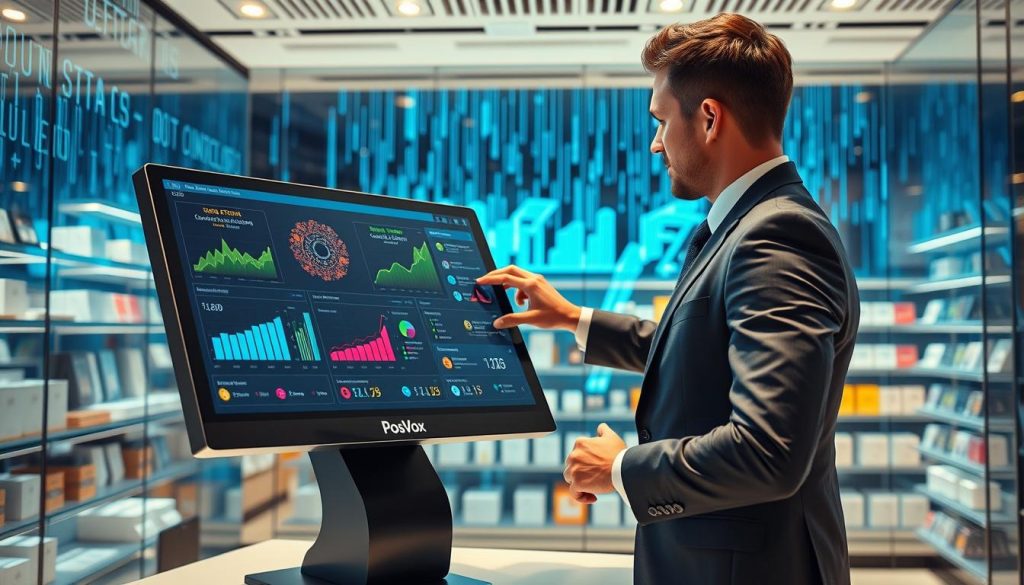
A good data governance strategy helps control data. It makes sure all data is handled safely. This way, data is a plus, not a minus.
Meeting PCI-DSS Standards While Retaining Data Control
For any business that handles credit card info, PCI-DSS compliance is a must. Keeping your own data safe is better than relying on others. Use separate networks for payment info to keep it safe.
Encryption is the best way to protect card info. By controlling your own encryption keys, you keep data safe even if there’s a breach. This is key to keeping your financial data safe.
Ensuring GDPR and CCPA Compliance in Data Management
For GDPR data management, businesses must respect people’s data rights. This means letting people see, change, or delete their info. Your system must be able to handle these requests without problems.
The CCPA also protects California residents’ data. Keeping a detailed record of how data is used is important. This way, you can meet requests fast and right.
Managing Sensitive Customer Information Safely
Protecting sensitive info is more than just using software. It’s about creating a culture of security. Limit who can see customer data and train staff to protect it.
| Regulation | Primary Focus | Key Requirement |
|---|---|---|
| PCI-DSS | Payment Security | Encryption & Segmentation |
| GDPR | EU Privacy Rights | Data Portability & Deletion |
| CCPA | California Consumer Rights | Transparency & Opt-out |
Selecting POS Vendors That Prioritize User Ownership
Choosing the right partner is key to your company’s future. It’s about respecting your right to own your sales data. With 92% of companies knowing leads won’t buy if data is not secure, picking the right POS vendor is critical.
This choice keeps your business flexible and safe from future problems.

Key Questions to Ask During the Procurement Process
Don’t just look at features when talking to vendors. Ask about owning your sales data and how easy it is to get it out. A good vendor will tell you straight away about your pos system data ownership rights.
Also, ask about POS API integration. This lets you move your data between systems easily. Make sure the vendor follows strict PCI-DSS compliance to keep customer info safe.
Red Flags in Vendor Service Level Agreements
Look out for contracts that limit your control. A big warning sign is if they claim your sales data or charge a lot to get it back. If a vendor makes it hard to leave, they’re more worried about keeping you than helping you.
Be careful of vague terms about getting your data back when you leave. If the contract doesn’t clearly say you keep your data, you might have big problems later. Always demand clarity before you sign anything long-term.
Prioritizing Open-Source or Vendor-Neutral Platforms
Choosing open-source or vendor-neutral platforms is smart for keeping control. These systems work well with other tools, avoiding vendor lock-in. This way, you keep your pos system data ownership in your hands.
The table below shows the differences between proprietary and open systems. It helps you decide what’s best for your business.
| Feature | Proprietary POS | Open/Neutral POS |
|---|---|---|
| Data Ownership | Often restricted | Full user control |
| API Flexibility | Limited/Closed | High/Open access |
| Compliance | Vendor-managed | Transparent standards |
| Migration Ease | Difficult/Costly | Seamless/Standardized |
Mitigating Possible Conflicts During Vendor Transitions
Planning well is key to a smooth change between retail tech vendors. Moving sales records and customer data can be hard. Good data migration planning keeps your transition smooth and keeps important info safe.

Planning for Data Migration Before Contract Expiration
Don’t wait until the last minute to move data. Know your data portability rights early to get what you need. This way, you can avoid big problems before they start.
“The integrity of your data is the foundation of your customer relationships; protecting it during a transition is not just a technical task, but a business imperative.”
Ensuring Full Data Retrieval During Offboarding
The offboarding phase is very risky for your data. Make sure all data fits with your new system. Follow strict GDPR data management rules to keep customer info safe.
Here are key steps for safe data transfer:
- Ask for a full database dump in a format like CSV or SQL.
- Check that all transaction logs are complete and correct.
- Make sure the old vendor has deleted your data.
Studies show 94% of businesses won’t work with you if data protection is bad. This shows why keeping data safe during offboarding is very important for your reputation.
Maintaining Business Continuity During System Switches
True business continuity means keeping things running smoothly. A step-by-step migration is often best. This lets you test the new system while the old one is used.
Choosing the right POS vendor is key. Look for partners who support you well during the change.
By using these strategies, your business stays strong no matter the tech you use. A smooth transition protects your assets and helps your business grow.
Conclusion
Getting full control over your pos system data is key to being truly in charge. Business owners who do this keep their digital treasures safe from others.
Using smart rules and new tech helps keep data safe for a long time. This way, important info stays private, not owned by others.
By focusing on data control, companies stay strong against changes in the market. Leaders can follow rules and be ready for new digital trends.
Smart business owners see their transaction records as the base of their growth. Taking control of this info gives them a lasting edge.
Check your service deals to make sure data freedom is a big deal. Doing this now avoids problems later when systems change or providers switch.
The path to full freedom starts with being open. Every business should be able to see and manage its own history freely.